
1. Course Overview
Muslim institutions require servant leadership, transparent board governance, and sustainable financial foundations. This course synthesizes Prophetic management principles with modern non-profit governance standards, focusing on ethical stewardship (Amanah), consultation (Shura), board accountability, and revitalizing the institution of Waqf.
2. Who Is This Course For?
Mosque trustees, non-profit directors, community organizers, and aspiring Muslim executives.
3. Learning Outcomes
By completing this structured course, you will achieve:
4. Syllabus & Curriculum Breakdown
Structured one-on-one progression overseen directly by your assigned instructor:
Module 1: The Prophetic Leadership Paradigm
Leadership as service (Khadim al-Qawm Ra'isuhum), emotional intelligence, delegation, and moral courage.
Module 2: Institutional Governance & Board Stewardship
Fiduciary duty, Shura mechanics, avoiding founder's syndrome, fiscal transparency, and succession planning.
Module 3: The Institution of Waqf: History & Law
Pillars of Waqf, perpetuity, irrevocable endowments, family vs. charitable Awqaf, and civilizational impact.
Module 4: Modern Waqf Revitalization & Capital Models
Cash waqf, microfinance endowments, real estate trusts, and building resilient modern Muslim endowments.
5. Classical Texts & Reference Works
Rooted in authentic classical scholarship, this course references the following authoritative sources:
- The Art of Islamic Leadership
- Ahkam al-Waqf (Imam al-Khassaf selections)
6. Your Instructor
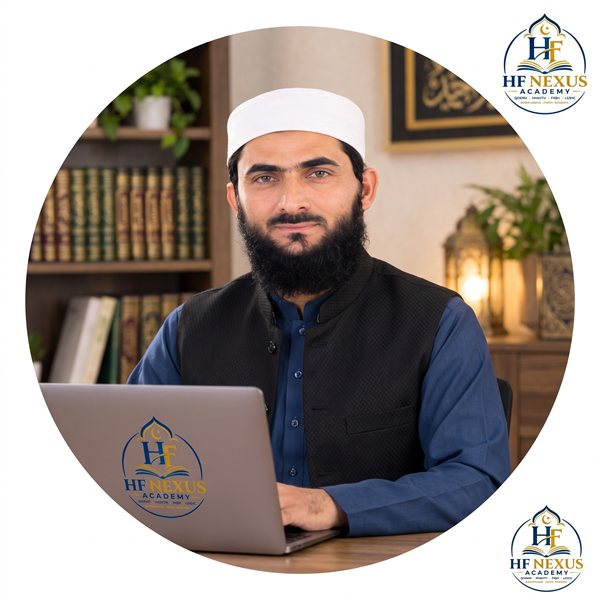
Molana Saif Ullah
Certified Alim-e-Deen focusing on classical Hadith canons, Sunnah methodology, and comprehensive Seerah studies.
View Full Faculty Profile →7. Academic Details
Prerequisites
None.
Certificate of Completion
Executive Certificate in Islamic Non-Profit Governance & Waqf Management.
Frequently Asked Questions
Islamic Leadership, Organizational Governance & Waqf is taught exclusively as live 1-on-1 online classes, not group sessions. Every lesson is a private video session with your teacher, so the pace, explanations and corrections are tailored to your level and goals.
Islamic Leadership, Organizational Governance & Waqf is taught by Molana Saif Ullah, Instructor in Hadith & Prophetic Biography at HF Nexus Academy. All our teachers are certified Islamic scholars trained in traditional institutions. When booking your free trial you can choose a male or female tutor preference, and our admissions team will confirm availability for this course.
Yes. Islamic Leadership, Organizational Governance & Waqf lessons are scheduled in your local time, whether you live in North America, the UK, Europe, Australia, or the Arabian Gulf. Classes can be arranged on weekdays or weekends, in the morning or evening, to fit around work, school and family commitments.
Islamic Leadership, Organizational Governance & Waqf typically takes 3 Months of consistent 1-on-1 study at the All Levels level. The curriculum is organized into 4 modules: The Prophetic Leadership Paradigm; Institutional Governance & Board Stewardship; The Institution of Waqf: History & Law; Modern Waqf Revitalization & Capital Models. Your teacher adjusts the pace to your weekly class frequency and progress.
Islamic Leadership, Organizational Governance & Waqf is recommended for: Mosque trustees, non-profit directors, community organizers, and aspiring Muslim executives. Prerequisites: None.
Yes. On completing Islamic Leadership, Organizational Governance & Waqf, students are awarded: Executive Certificate in Islamic Non-Profit Governance & Waqf Management. Awards are issued by HF Nexus Academy based on your teacher's assessment of your progress.
Yes. You can book a free 30-minute 1-on-1 trial class for Islamic Leadership, Organizational Governance & Waqf with no payment details required. During the trial your teacher assesses your current level and goals and recommends a study plan; after that, our admissions team confirms your regular schedule so you can begin lessons.
Curriculum Pathways & Related Courses
This course is part of our structured Islam & Contemporary Life curriculum. You can also explore our step-by-step Curated Learning Paths or continue your studies with these related courses: